
Varanasi: 2 kW under PM Surya Ghar
Verde Solaire installed a 2 kW rooftop solar system at a home in Varanasi, Uttar Pradesh, under PM Surya Ghar: Muft Bijli Yojana, and posted about it on 22 March 2024. The system uses Adani 540 Wp panels and a KSolare inverter. The post says the owner receives a central subsidy of ₹60,000 and a state subsidy of ₹30,000, both paid directly into their bank account.
The post describes this as the start of the company's PM Surya Ghar work in Varanasi. Everything here comes from that post and from the policy documents behind the two subsidy figures; what the post did not publish is left out.
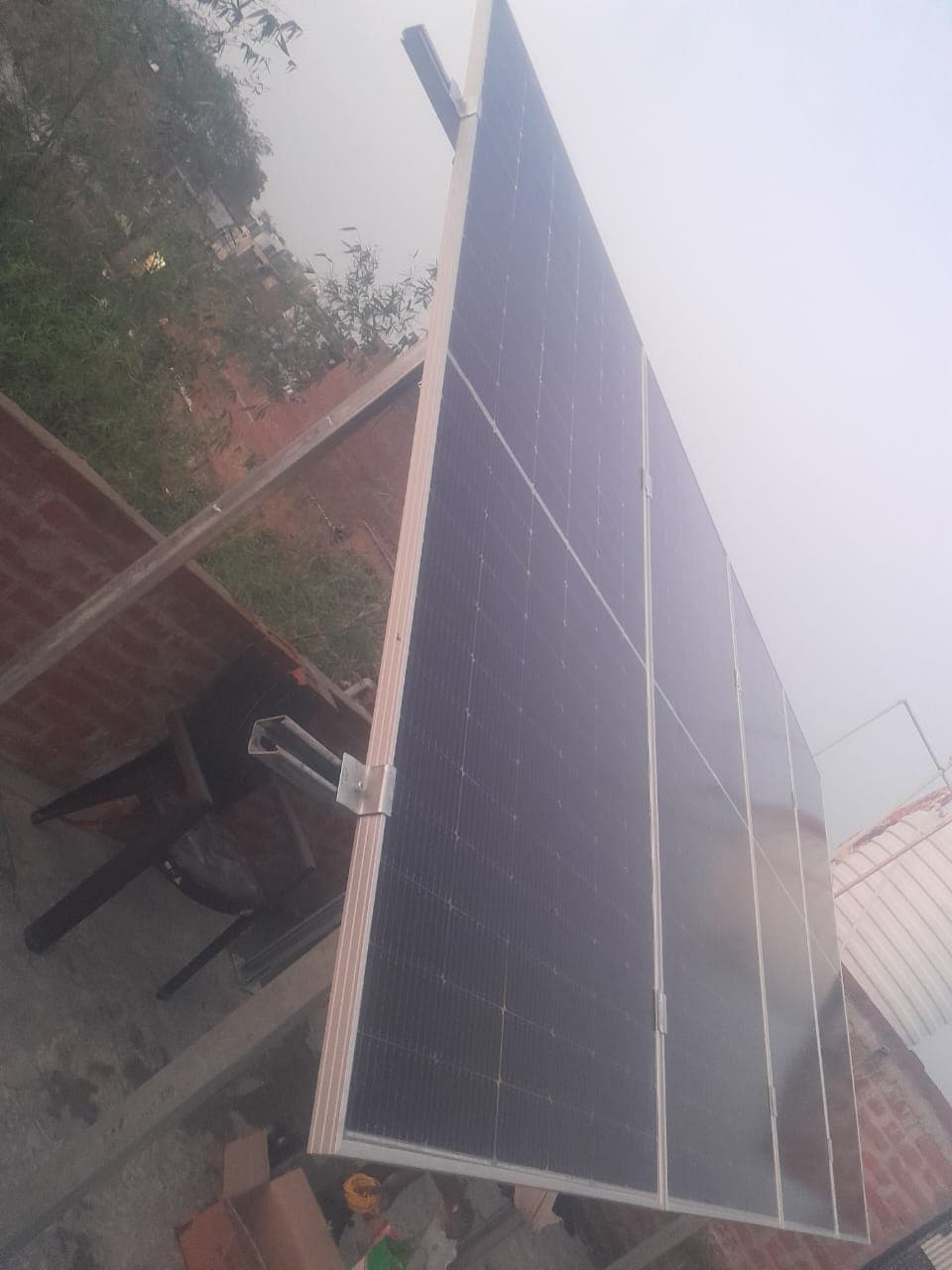
The system as published
| Item | Published figure |
|---|---|
| Location | Varanasi, Uttar Pradesh |
| Capacity | 2 kW |
| Scheme | PM Surya Ghar: Muft Bijli Yojana |
| Panels | Adani, 540 Wp |
| Inverter | KSolare |
| Central subsidy | ₹60,000 |
| Uttar Pradesh subsidy | ₹30,000 |
| Paid to | the owner's bank account |
| Posted | 22 March 2024 |
How the two subsidies add up
The central subsidy is ₹30,000 per kW for the first 2 kW, so a 2 kW system receives ₹60,000. A third kilowatt would add ₹18,000, up to the cap of ₹78,000, and nothing more above that. Uttar Pradesh adds ₹15,000 per kW, capped at ₹30,000 per consumer, on top of the central subsidy, under the UP Solar Energy Policy 2022, which means a 2 kW system already reaches the state cap. Together they come to ₹90,000 for this system, as the post describes. News reports in September 2026 confirm the state top-up is still being paid: combined central-plus-state totals of ₹45,000, ₹90,000 and ₹1.08 lakh for 1, 2 and 3 kW, paid by direct bank transfer 30–45 days after verification.
The post also said the owner would get free electricity of up to 300 units a month. That phrase comes from the scheme's publicity: 300 units is what the government expects a roughly 3 kW system to generate, not an allowance credited to the bill. A 2 kW roof in Varanasi generates about 225 units a month, and the net meter sets those units against the ones the house draws from the grid. The who pays whom guide separates the subsidy, the credit and the bill.
What a 2 kW system costs today
Verde Solaire's July 2025 price list puts a 2 kW system at ₹1,35,000 to ₹1,50,000, including panels, inverter, mounting structure, net metering, installation and warranty. After the same ₹90,000 of subsidy, a Varanasi owner pays ₹45,000 to ₹60,000. The Varanasi price page carries the full ladder from 1 kW to 10 kW, and the Uttar Pradesh subsidy guide explains how the state top-up is claimed.
Net metering in Varanasi
Varanasi's electricity distributor is PUVVNL (Purvanchal Vidyut Vitran Nigam Limited), a UPPCL company. Under the UPERC rooftop solar regulations, under the UPERC rooftop solar regulations of 2019, residential users may choose net or gross metering, and the DISCOM allows capacity within transformer limits. Verde Solaire's Varanasi branch at Chetgunj files the application and follows the net meter through to activation; the steps are on the Varanasi net-metering page.
Mahender Nath Mishra, a Varanasi customer, described the same subsidy and net-metering process:
"Special mention to Mr. Sachin Dubey of the firm who helped in all the processes including documentations for net metering."
Mahender Nath Mishra
Equipment and compliance
Subsidised systems must use both the modules and the cells must be made in India. A system installed today must also use cells on ALMM List-II, which applies from 1 June 2026; this March 2024 installation predates that rule. The ALMM List-II explainer covers what to check on a quote.
Related projects
Verde Solaire posted a 5 kW installation in Varanasi under the same scheme on 1 June 2024, where the subsidy arithmetic changes because the system passes 3 kW. The Varanasi installation page covers the survey, the paperwork and the timeline.
Questions people ask
Start with a clear plan for your savings
Get a free roof assessment and a written quote for branded equipment. We will also explain the loan, installation, net-metering and subsidy steps.